The Penelopiad

I love Margaret Atwood. I open one of her books, wondering if I’m going to read it next, and then I’m on page 35. Her prose is like really expensive vodka: clear, neat, but surreptitiously powerful. I love it.

h_8433144977_3288fb1c81_z

How can you not love her?

Just as Christa Wolf gives voice to Cassandra (though in Wolf’s retelling, Helen is disembodied: an excuse; a representation of woman as the binary opposite of man: 0: Cassandra: nothing), Atwood gives us Penelope’s perspective. Woven throughout the text is the chorus of the 12 maids who were hanged upon Odysseus’s arrival for “treason,” for sleeping with the suitors. These maids have haunted Atwood, and in The Penelopiad, Penelope gives us their story, uncoiling the truth behind their brief and dismissive appearance in The Odyssey.

Penelope reminds us that Odysseus competed for Helen’s (her cousin) hand but lost to Menelaus. After the games, each man swore an oath to protect Helen and Menelaus’s marriage. Depending on which myth you read, Helen was either stolen or gifted to Paris by Aphrodite, but Atwood goes with Occam’s razor: that Helen ran off with prettyboy Paris. Either way, Odysseus had sworn an oath, so off he goes to fight in the Trojan War. After 10 years, victorious, he sets sail for home. This journey also takes 10 years. He fights and blinds Cyclops, Poseidon’s son, creating a powerful enemy, particularly when you travel by boat; fucks and parties with Circe for a while; goes down to the Underworld; pisses Zeus off, then has to stay and fuck Calypso for a couple of years to redeem himself.

Through it all, Penelope waits.

Some suitors come after her (loot). Shouting that her husband is dead, they plant themselves in her court, eating and raping as they see fit, all the while demanding she marry one of them. The ever-faithful wife heeds the advice of her naiad mother:

Water does not resist. Water flows. When you plunge your hand into it, all you feel is a caress. Water is not a solid wall, it will not stop you. But water always goes where it wants to go, and nothing in the end can stand against it. Water is patient. Dripping water wears away a stone. Remember that, my child. Remember you are half water. If you can’t go through an obstacle, go around it. Water does.

She schemes around the obstacle, telling the suitors that she will choose one of them, but only after she weaves a shroud for her father-in-law. By day she weaves, and by night, with the help of her 12 youngest and prettiest maids–her daughters, as she calls them, since she’s known them and loved them since they were children–she unweaves. She sends these 12 maids to spy on the suitors, soak up all the information they can. Some are raped, some acquiesce to avoid the pain of rape, some, inevitably fall in love, but all report back to Penelope. None of them are unfaithful.

Their deaths are unjust. They are thrown away without a second glance. Because, after all, sex with the help is allowed but only with the master’s permission. As Odysseus was away and could not grant permission, the suitors were charged with theft, not rape. And since the concept of rape is a modern concept, the girls were blamed, charged with treason, and hanged.

(Oh, but wait, blaming the victims for their own rape isn’t all that archaic. Here’s a collection of hideously horrible tweets blaming the 16yo victim in the Steubenville rape case.)

In the afterlife they haunt Odysseus with their crooked necks and dangling feet. So much so, he never sticks around, instead he opts for rebirth. Thus, perpetually leaving Penelope, who then waits another lifetime until he dies again.

This is her fort/da. The waiting game. Her trauma repetition compulsion that she can’t get away from, even in death. Home/Away. Arrival/Departure. Love me/Leave me.

My favorite part was the meta-analysis in chapter 29, “The Chorus Line: An Anthropology Lecture,” where Atwood (presented by the maids) deconstructs the significance of the 12 maids’ deaths. I’m always a sucker for this kind of thing. Symbolism makes my day, my life. As a kid, I thought there was truth in symbolism, as though the “signs” I encountered were prophetic. And still, there is a sort of “truth” in unveiling the hidden messages in texts. Of course, interpretations are limitless, but still, it’s fun to decipher and illuminate (an often applicable) nugget of wisdom. Symbolism is the closest thing I have to divinity.

The 12 maids are the 12 months, which can be attributed to the virginal Artemis of the moon, because, as we know, month comes from moon and Artemis is the goddess of the moon. And since there are technically 13 lunar months, we’ll count Penelope as the High Priestess, the incarnation of Artemis. The maids, at the behest of their High Priestess, engage in orgiastic fertility rituals with the suitors, then after Odysseus slain the suitors, the maids were forced to clean up their bodies, their blood, possibly purifying themselves as Artemis had done in the blood of Acteon. In The Odyssey, Odysseus competes for Penelope’s hand in games rigged in his favor, notably, he is the only one who knows how to work the bow used to shoot an arrow through the 12 axe-heads. Bow: “the curved old-moon bow of Artemis.” 12 axe-heads: 12. “The arrow passed through the loops of their handles, the round, moon-shaped loops!” Then the maids were killed. Just as the moon hangs above the earth, the women hang before the men.

Thus possibly our rape and subsequent hanging represent the overthrow of a matrilineal moon-cult by an incoming group of usurping patriarchal father-god-worshipping barbarians. The chief of them, notably Odysseus, would then claim kingship by marrying the High Priestess of our cult, namely Penelope…

In the pre-patriarchal scheme of things, there may have well been a bow-shooting contest, but it would have been properly conducted. He who won it would be declared ritual king for a year, and would then be hanged – remember the Hanged Man motif, which survives now only as a lowly Tarot card. He would also have had his genitals torn off, as befits a male drone married to the Queen Bee. Both acts, the hanging and the genital-tearing off, would have ensured the fertility of the crops. But usurping strongman Odysseus refused to die at the end of his rightful term. Greedy for prolonged life and power, he found substitutes. Genitals were indeed torn off, but they were not his – they belonged to the goatherd Melanthius. Hanging did indeed take place, but it was we, the twelve moon-maidens, who did the swinging in his place.

How do you not love Margaret Atwood?

She turned The Penelopiad into a play now too! Which makes an infinite amount of sense, considering how made for the theater The Penelopiad is. Atwood in an interview: “The book is in essence theatrical. It’s a lot like the structure of a Greek tragedy, in that the central characters’ stories are told in quite long monologues, then the chorus comment on the action.”

Please come to Chicago!

(And The Handmaid’s Tale is now an opera as well! Swoon.)

The Penelopiad is part of the series, “The Myths,” from Canongate Books, a print publisher, in which top writers retell myths. I’ve only read Philip Pullman’s The Good Man Jesus and the Scoundrel Christ from that series. And I loved that too. (I also wrote about it.)
Posted in Uncategorized | Tagged , , , , , , | 6 Comments

Dora: a Headcase

ImageDora, Freud’s infamous and beloved hysterical mute.

Dora, “the true ‘mistress’ of the Signifier.” (Cixous)

Dora, feminist extraordinaire.

Dora, teenage sherocket in combat boots.

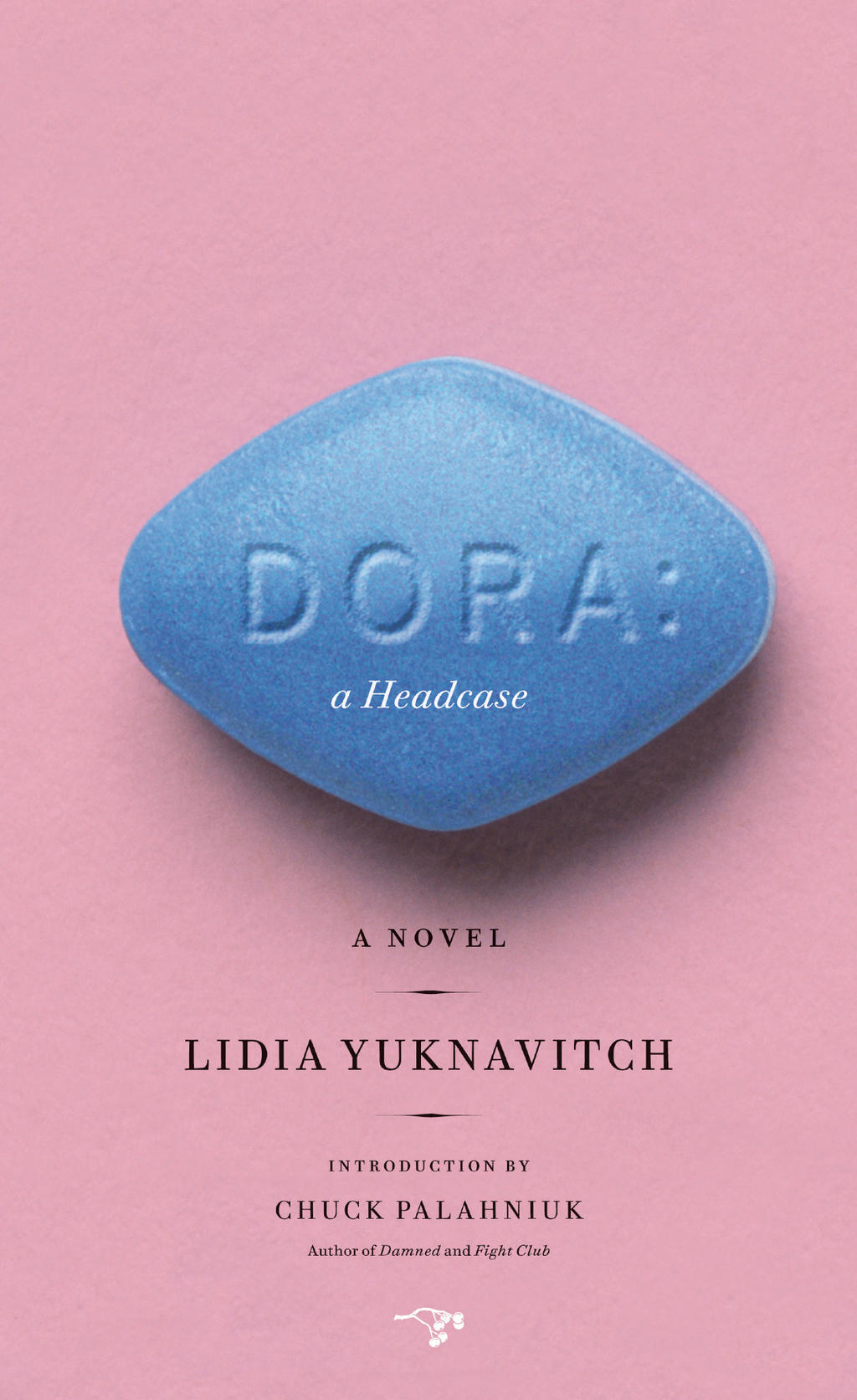
Given the importance of Freudianism, it’s easy to see the feminist attraction to Dora. For Hélène Cixous, Dora is “the one who resists the system, the one who cannot stand that the family and society are founded on the body of women, on bodies despised, rejected, bodies that are humiliating once they’ve been used.”

In other words, silence is sometimes the only power a woman has. It’s an active refusal of male mastery. Dora’s silence is a revolt against the patriarchal suppression of female bodies and feminine language.

But lately that doesn’t seem good enough for me. It’s not aggressive enough. Silence as rebellion is outdated. We can do better than that.

 (And Yuknavitch does.)

Silence requires the other to fill in for the silent one. Silence can give the other control over the situation. The other interprets. The other assumes. The other speaks for you. Much like an anorexic who diminishes her body to take up less space in the world, she insists she is asserting agency over her body, claiming it as her own.

On the one hand, I get the feminist impulse to take control of your own shape. But the other hand in my pocket feels like this kind of control is a last gasp attempt at agency. A consolation prize. It’s a resistance to total subjugation, sure, but only within an admission that you are already engulfed. I consider it like euthanasia, or suicide. You are dying, but goddamnit this disease/enemy/government is not going to take you; you’re going to control how and when you die. It’s all you’ve got.

But Lidia Yuknavitch’s Dora has.so.much.more.

IRL, Freud slapped an Electra Complex onto her file, and then after eleven weeks of erroneous insistence on misplaced sexual desire for her father, Dora said, Fuck it. I’m out. Ultimately, Freud considered the case a therapeutic failure. Because, obviously, it was. It’s also the case most cited to underscore Freud’s blatant misunderstanding of women at best, his misogyny at worst.

Inside the Fuck it. I’m out. breathes, boils, creams Yuknavitch’s novel, Dora: a Headcase.

384718_4320437097239_1243507674_n

One of Yuknavitch’s call to arms on “facehooker”, asking her friends to post pictures of their bodies with texts beside them such as, “My body is not your battleground.”

To Yuknavitch, Dora is not a passive symbol, an object to be interpreted, a dull skinsack obsessed with her father’s penis. Dora is a clenched body, blowing fire and recording the damage. Her voicelessness is not a silent protest. She is its victim. It happens to her. But voice is just vocal chords bumping uglies. It’s just a sound. This Dora never loses her proverbial goddessmothertongue voice. This Dora is never silent. She writes.

And she records.

She gets her revenge.

And it’s intense.

In the novel, Freud is barely a match for Dora. You even pity him sometimes, and then you remember him saying “women are ‘mutilated’ and must learn to accept their lack of a ‘penis’,” and you think, Carry on, Yuknavitch. Carry on.

After all, he brought up mutilation first.

Some will think that Dora is a monster. That her friends are delinquents, rejects and riffraff. But they are a family. A sweet and loving substitution for the fucked up reality that is “family”. I so wanted to be part of their circle. Popping pills, playing dress-up, and making art. All with their whole lives ahead of them. Young love, young rage. She certainly made me nostalgic for high school. And I couldn’t agree more with everyone who said Dora: a Headcase is this generation’s Catcher in the Rye. I can’t wait to show it to my daughter.

What I love most about Dora: a Headcase (and I pretty much loved everything), is Yuknavitch’s subversion of Freudian “daddy issues” into the trauma of the withdrawal of the Motherbody. Long ago Dora’s mother checked out. She was there, and not there. Silent and drinking, drowned. Are you my mother? Dora asks, demands. Nothing. Herein lies the roots of her breakdown. On the surface of a spoon, she lives alongside her mother’s ghostly reflection, and it rubs her raw. Mother, why weren’t you there for me? Mother, what are you good for?

I’ve always felt the world of mothers and daughters is often overlooked. There’s so much there. I feel a goldrush will soon be coming on us readers, and I can’t wait to devour it all. Because unlike the breadth of the father and son trope, the mother and daughter trope is so untapped. Let’s dig, let it all gush.

And just like Cixous implores in The Laugh of the Medusa, LADIES WRITE YOUR STORIES. Don’t let others interpret your silence. The patriarchy has been doing this far too long. Give them hell.

I’ll leave you with Dora.

You know what? Seventeen is no place to be. You want to get out, you want to shake off a self like old dead skin. You want to take how things are and chuck it like a rock. You pierce your face or you tattoo you skin – anything to feel something beyond the numb of home. You invent clothes other people think are garbage. You get high. You meddle with sexuality. You stuff your ears with ear buds blasting music so loud it’s beyond hearing, it’s just the throb and heat and slam and pound and scream of bodies on the edge of adult. You text your head off. You guerilla film. We live through sound and light – through our technologies. With our parents’ zombie life dope arsenal at our fingertips.

I’m not criminal.

I’m just a daughter. I’m not sick.

I.

Just.

Need.

Out.

Posted in Uncategorized | Tagged , , , , , | 6 Comments

Other Women

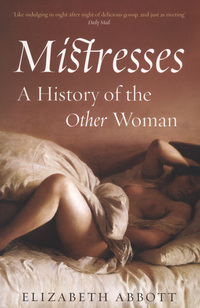
image-mediumI had been waiting a year to read Elizabeth Abbott’s Mistresses. In the early days of bébé, I was eyes burning, skin aching, fall asleep standing tired. Every time I opened a book, no matter how much I fought it, I was out within five pages. Now when she sleeps I lie awake in bed reading, devouring, until 2, 3, 4am like I’m back in college and can sleep until noon.

I love a good nonfiction book, it’s almost as though I can turn off my interpretive brain worm and just experience the story. It’s nice to enjoy without wanting to deconstruct and reconfigure. And Mistresses is right up my proverbial alley. Madame du Barry. Aspasia. George Eliot. Hannah Arendt. Maria Callas. Simone. I’m in. This is my circle.

Some chapters were tough. Eyes shut, pausing, empathizing, reeling, I read about children being snatched away forever, killed, or “exposed.” I read about inquisitions and beheadings and torture. From ancient Greece to Nazis to Marilyn Monroe. Then 2am, she’s awake, hungry, I rock and nurse bébé, inside I nurse rage.

When I was pregnant I felt awful all the time. Nauseous and sore, all alkaline and zero energy. I thought about how delicate my constitution was. It wasn’t really, I was growing a fucking human. But it was, I didn’t want to do anything but lay there and grow a human. I thought about how some woman are forced to do this, to sacrifice and grow people. (How some want to force everyone to do this.) How pregnancy, surely, has held us back. And I’m not even going to go into the oppressive little girl cult industry of pink and sparkles and pretty big Disney doe eyes. I was pregnant and I was pissed.

Then I had a daughter and I make her DIY Riot Grrrl onesies and hang posters in her room of little girls in suits of armor, brandishing swords, saying, I can save myself! Because while I can block princess now, I know that phase will come, and I must arm her as much as possible so she’s ready, so we’re both ready. I read Simone and Cixous, I choked back vomit this entire bullshit presidential election. I read Margaret Atwood’s Handmaid’s Tale.

Nolite te bastardes carborundorum.

Don’t let the bastards grind you down.

Sometimes that’s easier said than done.

When I was little I thought there were two kinds of women: the wives of the sun with their church and their baking and their cleanliness; and the mistresses of night with their sex and their will. I always identified with the bad girls, I rooted for them. They seemed so strong and luring. Of course, this black and white dichotomy is ludicrous. Both are dependent on heteronormative monogamous marriage. But at eight, I didn’t fathom outside of that, at least not really. Through mistressdom, I saw a kind of way out and I leapt onto it, and absorbed it into my identity.

The mistress was my first sidestep out of the suburbs, out of my Catholic uniform, out of conformity.

She will always have a special place in my heart.

And Abbott did her a solid.

tumblr_lle8e9f7lI1qha84jo1_500

Posted in Uncategorized | Tagged , , , | Leave a comment

Raw, beautiful, and honest

The first blog post feels important, emblematic, as though it foreshadows everything to come. I thought maybe I could begin with a thesis statement of sorts, but unlike my other blog, Eidetic Traces, which is rigid and structured–a kind of home for my academic writings, I envision this blog to be much more personal and sporadic. Which really means messier and bulimic.

I want to write the corporeal experience of reading. I want to dwell. I want to archive. Through literature, through art, I want to experience the unpleasantness and the jouissance of living, of writing. I want to insert my body into the text and fuck it till dawn.

tumblr_meqj9nzZMF1rjo9xeo1_1280

At the moment, nothing moves me more than this painting by Meghan Nafziger.

Here I see a woman planted in nature–not one with it, in that exhausted female naturalness woman-as-nature trope. Head resting on a bed of flowers, she lies naked in the grass, covering her feet with a blanket she, or maybe her grandmother, knitted. (Covered because she’s slightly chilled, not because of immodesty.) Majestic mountains behind her, lush fertile ground beneath her, she masturbates, tries to clear that chaotic head of hers. The flowers are a popping contrast to consciousness, which isn’t beautiful. It’s amorphous, busy, and heavy. It’s not easily calmed. At least mine isn’t. I’ve always had trouble masturbating. Mostly because as a teenager, I equated desire with wanting to be desired. I struggled pleasuring myself without performance. Here, this woman performs for no one, yet performs for us. Or simply is for us. For our consumption. And yet, I know she’s oblivious to that. Or doesn’t fucking care.

I admire this woman. I want to be her.

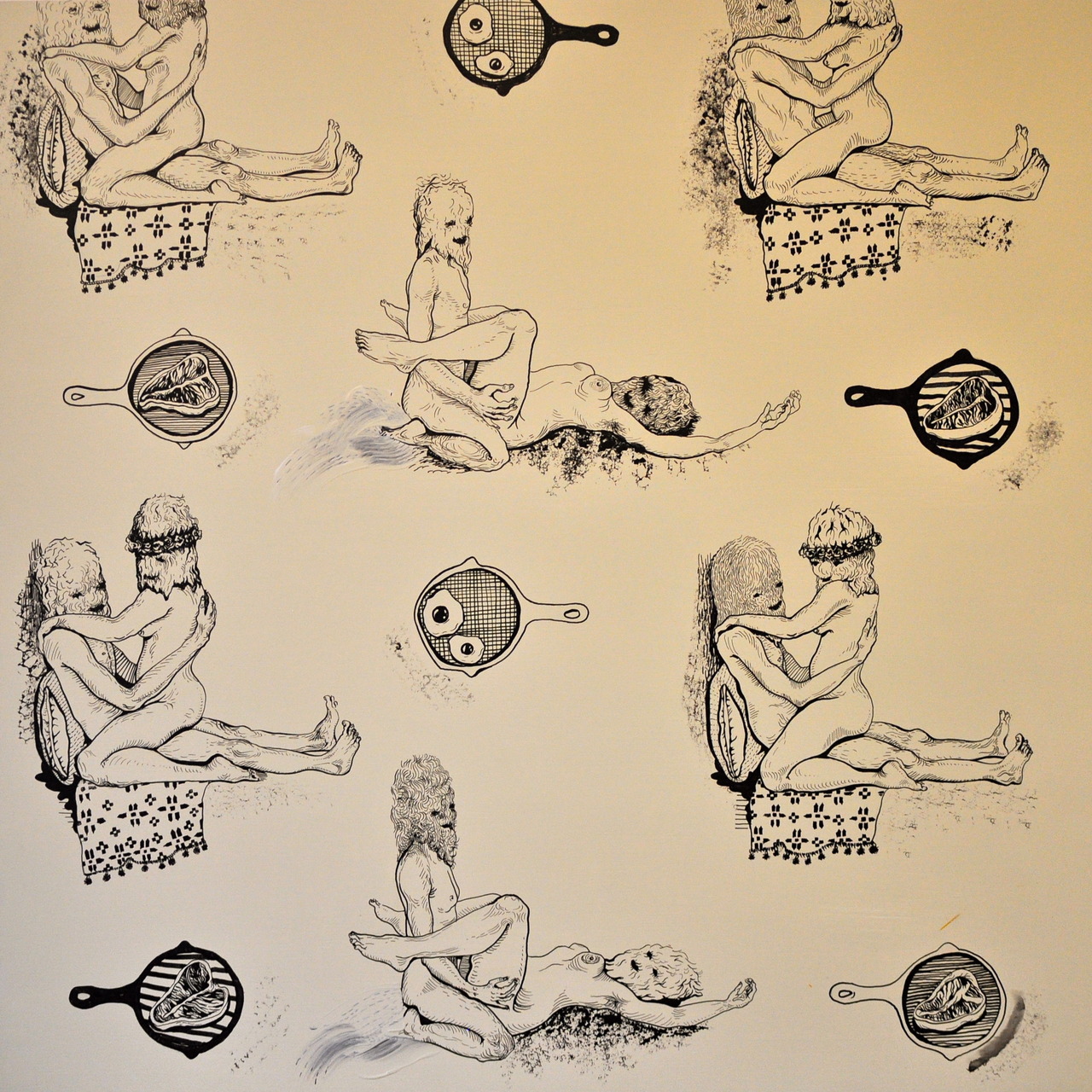
Meghan’s work can be grotesque but is always still sexy and enticing. Though the body is central, her world is deeply cerebral. I love what she does with patterns, textures, and repetitions. How the domestic and feminine doesn’t at all seem like a mere addition to the supposedly ordered, external world of men. Instead of cleanliness, we get carnality: steaks sizzling, organs exposed and distended. Each piece is teeming with life. Some of them are so deliciously detailed, spiraling out of themselves, enshrining the absurd, frenetic acts of lust. I just love it.

tumblr_mc2j10NLbf1rjo9xeo1_1280

tumblr_mc2iu3De3P1rjo9xeo1_1280

Her work is raw, beautiful, and honest. Exactly how I want this blog to read.

Posted in Uncategorized | Tagged | Leave a comment